Building Sovereign AI for Air-Gapped Environments: Why RAG, ML, and Agents Need an Internal Artifact Hub
Air-gapped AI is not just offline inference. It is an architectural discipline.
Building Sovereign AI for Air-Gapped Environments: Why RAG, ML, and Agents Need an Internal Artifact Hub
Air-gapped AI is not just offline inference. It is an architectural discipline.
When an enterprise moves AI workloads into a restricted or sovereign environment, the first instinct is often to focus on the model: which LLM will run locally, which GPU will serve it, and which RAG application will call it. That is necessary, but incomplete.
A production sovereign-AI platform needs more than a local model. It needs a controlled internal supply chain for everything the AI system depends on: container images, Python packages, model weights, embedding models, datasets, prompt templates, evaluation datasets, agent tools, security scans, signatures, and audit logs.
In a connected environment, developers casually pull from the internet. They install Python libraries from public repositories, download models from public hubs, pull container images from external registries, and fetch documentation or tools during build time. In a TL4 or air-gapped platform, that behavior is not allowed. The runtime environment cannot depend on direct internet access.
The solution is an internal artifact hub.
The pattern is simple:
External sources are accessed only from a controlled import zone. Artifacts are downloaded, scanned, checked, approved, signed, and transferred into the restricted environment. Once inside, workloads consume only from internal repositories. The AI platform never reaches out to the internet at runtime.
This applies to every AI workload.
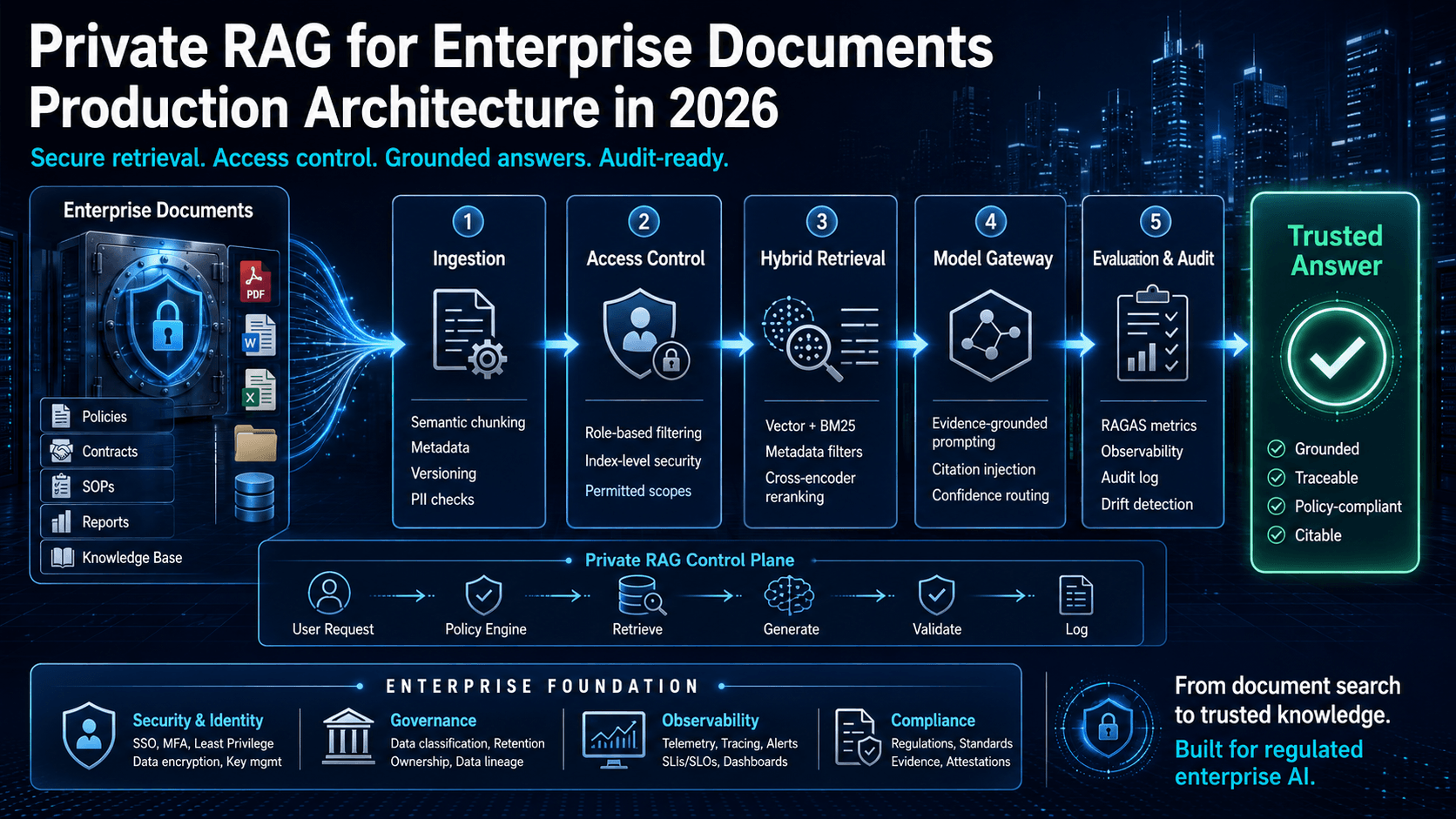
For RAG, documents must enter through a governed ingestion pipeline. They are scanned, classified, chunked, embedded, indexed, and made available through access-controlled retrieval. The RAG system should answer only from approved internal indexes and should cite the source chunks used to generate the answer.
For ML, datasets and model artifacts must be registered internally. Training jobs should use approved datasets, approved base images, approved packages, and approved model versions. The resulting model should pass evaluation before being promoted into serving.
For agents, the risk is even higher. An agent should not be allowed to discover arbitrary tools or call uncontrolled external APIs. It should use only approved tools from an internal tool registry, with policy checks, human escalation paths, and audit logging for every action.
This is the difference between a local AI demo and a sovereign AI platform.
A mature air-gapped AI architecture includes:
- an internal container registry
- an internal package repository
- an internal model registry
- an internal dataset registry
- an internal prompt registry
- an approved agent tool registry
- an evaluation and golden dataset store
- an audit log store
- a security evidence store for SBOMs, scans, and signatures
The goal is not only to run AI offline. The goal is to prove control.
A governed AI system should be able to answer:
What artifacts were used? Where did they come from? Who approved them? Which model answered the question? Which documents were retrieved? Which tools did the agent call? What was logged? Can the result be reproduced?
This is why an internal artifact hub becomes the foundation of sovereign AI.
RAG, ML, and agents are only the visible applications. The real product is the controlled platform underneath them.